

Found an Injured Bird of Prey?
Suffolk Owl Sanctuary: 03456 807 897 (Option 5)
Raptor Hospital & Whatsapp: 07475 277488
If you are able to approach or touch a wild bird of prey, there is very likely something wrong.
If you find an injured bird of prey, seek help straight away - call us, another wildlife rehabilitation center, or vets, BEFORE touching the bird or bringing it into us, and we will give appropriate advice.
Please note where and how the bird was found - this information greatly assists us in deciding the best actions, further rehabilitation, and release.
Avian Influenza
Please be aware of the key signs of avian influenza below:
Difficulty standing or loss of balance
Head tremors or seizure-like movements
Swelling around the head or eyes
Breathing difficulties or discharge from the mouth or nose
Appearing disorientated or unable to see properly
Found near multiple dead birds or large groups of waterfowl
Found nearby a body of water
If you notice any of these symptoms, do not touch the bird - report it to DEFRA on 03459 335577.
If the Bird Appears Injured
If it is safe to do so:
Use personal protective equipment: a mask & gloves
Prepare a cardboard box lined with a towel
Gently place a towel or blanket over the bird
Lift carefully and place the bird in the box, securing the lid
Keep the box dark, quiet and at room temperature
Transport the bird to a specialist rescue centre as soon as possible.
Do not put yourself at risk
Do not feed the bird
Do not give water
Do not attempt assessment or treatment
Do not pet or stroke the bird
Do not keep the bird
Wild birds of prey are extremely vulnerable to stress and require specialist care. Though well meaning, handling or examining a bird without specialist training may worsen hidden injuries or increase shock, significantly reducing its chances of survival. Incorrect food or feeding techniques may lead to choking or digestive failure, while offering water can easily result in inhalation and drowning.
Raptors also require licensed rehabilitation and expert veterinary care to recover fully and be returned safely to the wild. The kindest and most effective help is therefore to minimise contact and ensure the bird reaches experienced carers as quickly as possible.


Young Birds of Prey
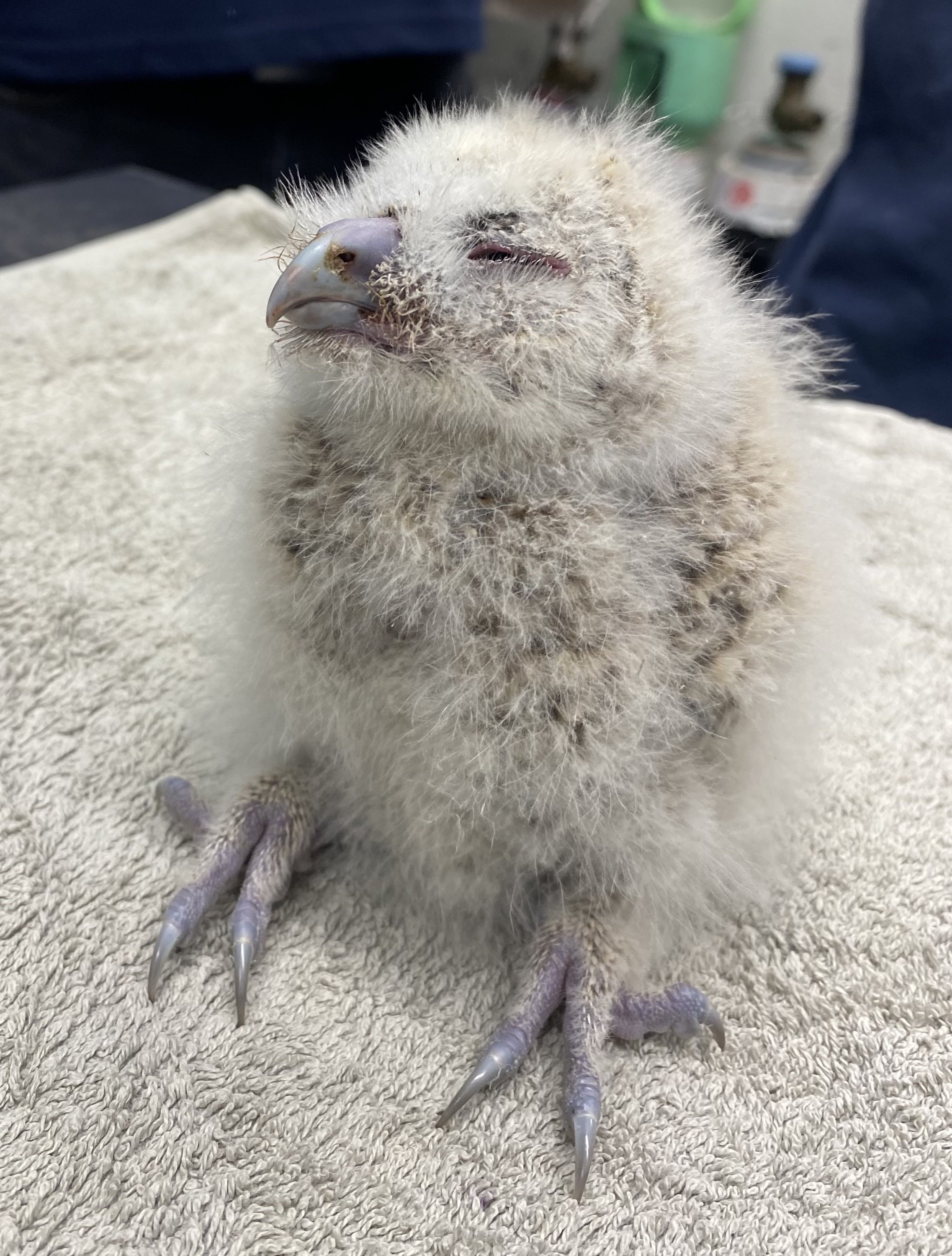
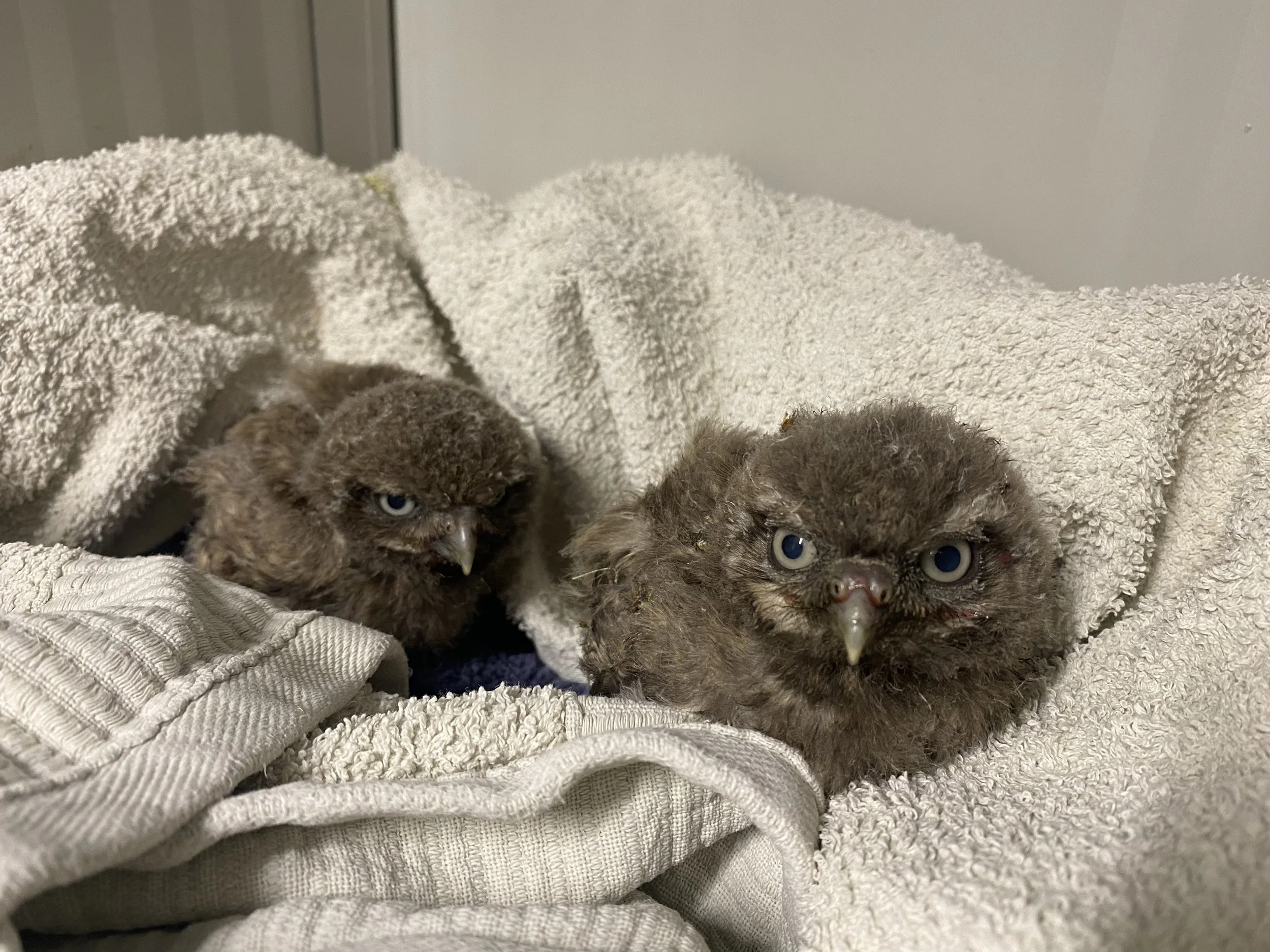
During spring and early summer, many young birds of prey leave the nest as part of their normal development. These youngsters are often mistaken for injured or abandoned birds when, in fact, their parents are usually close by and continuing to care for them. Removing a healthy young bird unnecessarily can separate it from its parents and reduce its chances of survival in the wild.
If you are unsure whether a young bird needs help, please contact our team first. We can talk through what you are seeing and assess the situation before any intervention takes place.
-
As spring arrives, Tawny Owl chicks begin a natural stage of development known as branching. At around three to four weeks old, young owls leave the nest before they can properly fly, moving between branches and exploring the surrounding area.
It is therefore very common to find tawny owlets on the ground. Although they may appear vulnerable, this behaviour is completely normal!
Tawny owlets are surprisingly capable climbers and can use their beaks and talons to make their way back up the tree. Their parents remain nearby and will continue feeding and protecting them throughout this stage - remaining with their parents is always the best outcome for the young bird.
If the owlet is uninjured, the best thing you can do is gently place it on a nearby branch or elevated, sheltered position close to where it was found. This keeps it safe from immediate dangers while allowing the parents to locate it again.
Please do not attempt to return the bird to the nest, as nests are often high and difficult to reach and adult owls may defend the area.
However, help may be necessary if:
the owlet is visibly injured
it is found close to roads, pets, or other immediate dangers
the bird appears very young and not yet at branching age
there are signs of disease or dead birds nearby
In these situations, please follow the guidance above for injured birds and contact us for advice.
-
Barn Owls behave differently from Tawny Owls and other species; if a Barn Owlet leaves or falls from the nest, the parents will not continue feeding it on the ground. This places the youngster at significant risk and assistance is normally required.
Barn Owls are legally protected as schedule 1 species, and it is illegal to disturb an active nest. For this reason, please do not attempt to return a chick to the nest yourself.
If you find a Barn Owl chick outside the nest, contact us as soon as possible. Our team will guide you through the next steps and arrange rescue where necessary.
Not Sure What To Do?
We understand that it can be confusing to know whether a young owl or bird of prey genuinely needs help.
If you find any young or injured bird of prey, the safest first step is simply to call us. We can assess the situation with you and advise on the best outcome.
-
If you have found a bird that is not a bird of prey, unfortunately we are unable to help as we do not have the facilities or resources on site. Please follow the link below to the British Wildlife Rehabilitation Council (BWRC) website for other registered rehabilitation centres.